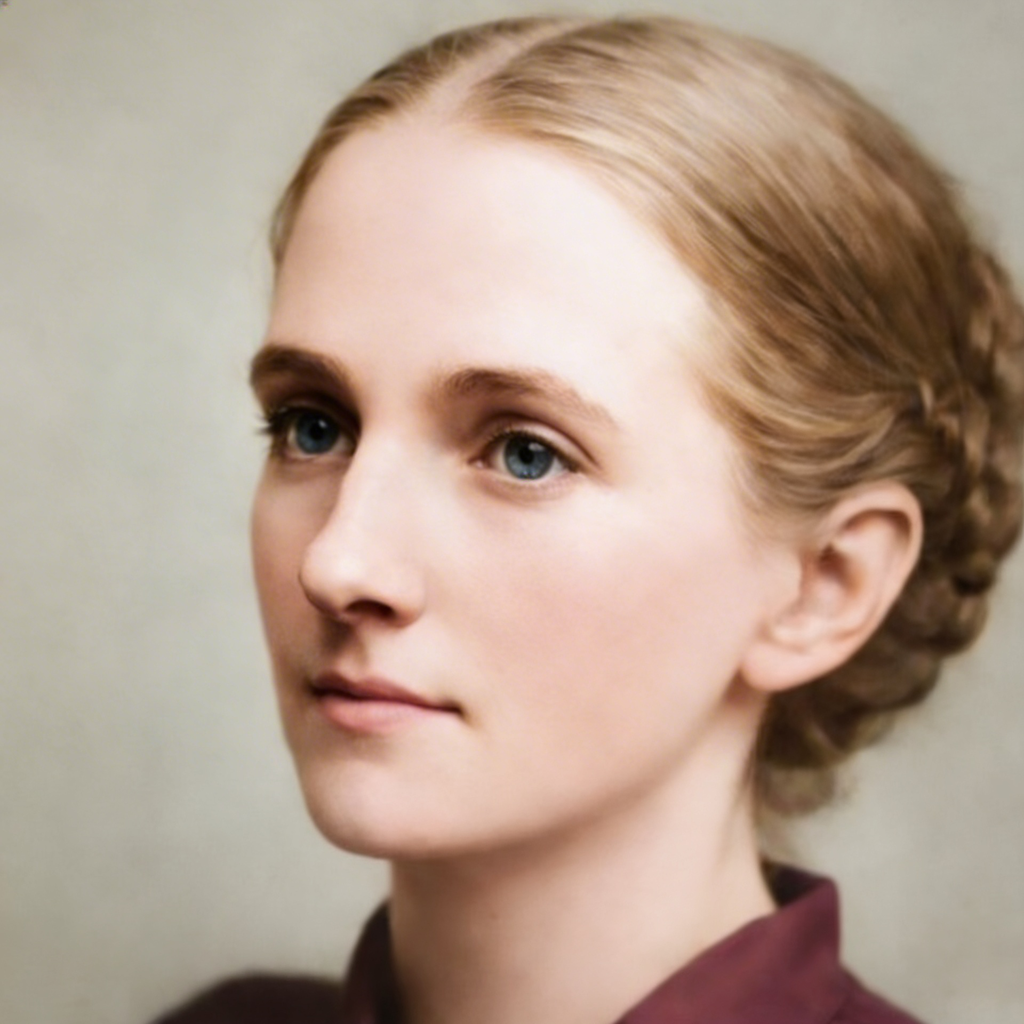
Margaret Scully
Margaret Scully (1832–1902)
Margaret Scully, born in 1832 in County Offaly, Ireland, was the daughter of Edward Scully (born 1789, County Offaly) and Anne Cassell (born 1803, County Offaly). She belonged to an older Ireland of fields, hedgerows, turf smoke, and close family ties—an inland rural world shaped by work, weather, and the steady demands of ordinary survival.
Margaret grew up in Killoughy, County Offaly, in the Irish midlands, a landscape of gentle farmland rather than dramatic coast. Life there would likely have been modest and labor-intensive. In homes of that world, daily existence was bound to the land: food preparation, tending household needs, walking rough roads, and living within a tightly woven local community in which church, kin, and neighboring families formed the rhythm of life.
Her teenage years unfolded during the time of the Great Famine. Born in 1832, Margaret would have been about thirteen when the potato blight struck in the mid-1840s and still in her teens during the hardest years that followed. County Offaly was not among the most devastated western coastal districts, yet it was still deeply affected. As an inland agricultural county, it shared the vulnerability of many Irish regions that depended heavily on the potato and had fewer fallback food sources than coastal communities. For a young woman in Margaret’s position, those years may have meant an uncertain diet of whatever could be found or obtained—potatoes when available, milk or buttermilk if the family had access to a cow, oats, coarse bread, Indian meal distributed through relief, and whatever scant substitutes hardship allowed.
It is possible that famine conditions marked her permanently. Even where death did not take a family, chronic undernourishment during adolescence could leave lifelong traces in body and bearing. The lean, bony quality visible in her later photograph may owe something to age, labor, and natural build, but it may also reflect a body formed in years of scarcity.
Margaret was the second to youngest child in her family. The older siblings remained in Ireland, while Margaret and her younger brother by two years James Scully, became the ones who left. This detail suggests more than a simple departure: it points to a family decision of the kind many Irish families made in and after the famine years. Often the older children stayed behind to help maintain whatever home, tenancy, or parental care remained, while the younger ones—those with perhaps the best chance of adapting—were sent outward to make a future elsewhere.
At twenty years old, Margaret emigrated from Ireland with James. They departed from Liverpool and landed in New Orleans, on the 30th of March, 1852. Such a route placed them within a major current of Irish emigration. Liverpool was one of the chief ports of departure for Irish migrants, and New Orleans, though less common a destination than New York or Boston, was a recognized gateway into the interior of the United States. The journey by ship would have been long and uncomfortable, undertaken in cramped steerage conditions with limited privacy, poor sanitation, and basic provisions.
From New Orleans, Margaret and James went on to Louisville, Kentucky. That path makes strong historical sense: New Orleans opened into the inland river system, and migrants could continue northward by steamboat along the Mississippi and then the Ohio River. Louisville in those years was a growing river city with work, trade, and a developing Irish presence. For two young emigrants from rural Offaly, it offered not only employment but also a possible foothold in a new life.
Margaret’s story is therefore not simply one of endurance, but of movement and decision. She was formed in a rural Irish world, carried through the great convulsion of famine, and then, as one of the youngest in her family, became part of the branch that left. She crossed from County Offaly to Liverpool, from Liverpool to New Orleans, and from New Orleans to Louisville—leaving behind one world and entering another.
What remains most striking is the sense that her later photograph preserves more than age alone. In that face one may reasonably imagine the aftereffects of hunger, labor, migration, and persistence: the long memory of rural Ireland, the discipline of survival, and the steadiness of one who crossed through history rather than merely living beside it.
This biography is a family-historical sketch based on known family details together with historically grounded context about rural County Offaly, the Irish Famine era, and common migration routes from Liverpool through New Orleans to inland river cities such as Louisville.